
Baking Bread: The Movie


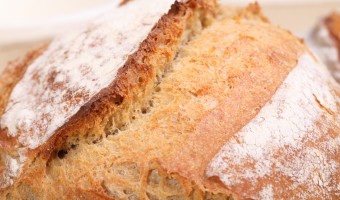
For the people who want to know the details: This film shows the making of a Pain Rustique French style bread based on a sourdough poolish (12 hour, 100%) with a high hydration dough, autolyse and stretch and fold technique in our Rofco hearth bread oven. We use German banneton’s (baskets) for the final proofing. The recipe is an adaptation of the Pain Rustique (Jeffrey Hamelman’s book ‘Bread’) recipe, however I have changed it a lot to fit our taste, oven and European flour.

Enjoy the real life ‘oven spring’ of the bread filmed in the oven. It starts at about 2:41 in the movie. We filmed the bread in the oven for 15 minutes and sped it up to fit in about 1 minute. So you will see the bread rise and brown in real time! It is really cool to see, do not miss it!

Note: The movie is filmed in full high definition quality (Full HD) so you can click on the ‘full screen’ icon (second icon on the bottom right) of the YouTube movie and also the ‘HD’ YouTube button and you will see it in very good quality, provided you have a broadband internet connection!

Let us know what you think about it!

Also see our posting, comments and more information at The Fresh Loaf bread baking community !

Ed

BAKING BREAD: THE MOVIE


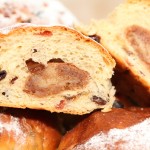
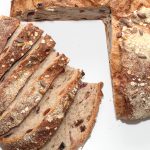
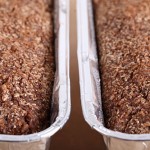
This is what the crumb looks like, up close…


Things We Baked over the Weekend


Again a weekend full of bread flavours and smells. The best thing to be done when all you get outside is rain, rain and more rain. In fact the weather was so bad that our Dutch Santa, the famous ‘Sinterklaas’ , did not pay us a visit on his birthday yesterday. So I turned out the first mince pies (with cranberry compote filling) of the year to lure in the Christmas season. Not a Dutch tradition at all but I just love making them. The sugar loaf is also a very rewarding piece of baking. You won’t believe the amount of sugar that goes into it. Hence the name of course. I tried to make it with less sugar, like I tried to make raisin buns with less raisins, but in these cases less is not more. Sugar loaf really needs all the sugar you can cram into it. Ed is now so trained in making his Pains Rustiques that next time we will see if he can do them blindfolded. If you want to see how the does it, watch out for the ’soon to be released bread movie’.

This Frisian Sugar Loaf was not so professionally cut by me in a jointy angle

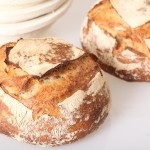
Six times ‘Pain Rustique’ – the maximum capacity of our bread oven

No, they are not from Mrs Miggins’ pie shop…

A Cappuccino as a reward for all the ‘hard labour’ – still trying to perfect the late art


San Francisco Sourdough Bread


Last week we tried out the San Francisco Sour Dough recipe from Peter Reinhart’s latest book ‘Artisan breads every day’. We used our home made local Amsterdam rye sourdough culture because we believe our bread thrives on it (rather then buying and shipping a sourdough culture from halfway across the globe that maybe would not feel at home here).

We made it during the weekend because to make these breads you have to have time and patience and planning skills!
First there is the starter stage , 8 hours of fermenting at room temperature, then 10 hours in the fridge. After that making the full dough with the starter: 2x stretch&fold with a 10 minute interval and 2 hours of fermentation at room temperature. Then it’s back to the fridge for 15 hours! Take from the fridge and let it get up to room temperature again, 2 hours. Divide and shape, proof 1-1,5 hours. And finally! the baking itself, 44 minutes in our Rofco bread oven. First result: see picture.

We think it’s worth it!

All these stages are necessary to build up the sourness in the dough. As the yeast is normally more active in sourdough than the bacteria which produces the sourness, in the form of lactic-acids, you need to stretch time to give the bacteria more time to do there job. Using the refrigerator is an excellent way to stretch time without the problem of the yeast eating up all the ‘food’ in the dough and ruining your gluten chains which makes the dough gloopy and soft. The cold of the fridge puts the yeast into a dormant state and gives more time to the bacteria to make the lactic-acids.

When the dough went in the oven we were not sure at all about the result. It looked like something between a pancake and a deflated balloon. The dough wasn’t easy to handle, it looked flabby. But the oven spring was enormous, as you can see by the final result in the picture. The bread has a pleasant light sour smell, crusty crust and full bread flavour. This first attempt has room for improvement: the crust was a little too dark and the shaping is a challenge. We also adapted the original recipe, used a little less water and added an extra stretch and fold and bench-rest during shaping. However we still need to perfect the recipe because the dough is still very soft and sloppy and hard to work with. The margin of error during shaping is very small, and sometimes the breads turn out as flat kind of pancakes which erupt in the center. But the taste is still very good!


Little Orchard Apple Pie


We always feel very lucky when we can share in the yield harvested by friends who own trees that bare fruit and nuts. Apples, peers and walnuts, we know what to do with them! Somehow they always taste better than the ones you buy in the store. Maybe it’s because they are simply left alone and not picked until perfectly ripe and ready, or have fallen out of the tree out of their own free will.

The apples I used for this pie came from family friends who are lucky enough to own a big piece of land with impressive old trees. With this recipe you make a little pie, nice to share with your loved one, have a piece today and leave some for tomorrow. That’s how we try to do it. I say try, because I start by serving a slice neatly on a plate. But somehow the pie that’s left on the kitchen table gets smaller and smaller. So funny! Maybe it’s mice, or apple trolls. I know it’s not me!

Recipe for the Orchard Apple Pie

serves 4-6

150 grams of wheat flour

6 grams of baking powder

110 grams cold butter in little cubes

75 grams of soft light brown sugar

1/2 egg for the dough

1/2 beaten egg for brushing

a pinch of salt

a little bit of lemon zest (optional)

3 tart cooking apples (goudreignet/rode van boskoop)

35 grams of butter and 50 grams of sugar for baking the apples

2 teaspoons of ground cinnamon

Making the apple pie
Peel and core the apples and cut them into cubes. Add the cinnamon to the apples and stir. Bake the apple cubes in the butter and sugar until slightly soft. Drain the apples and keep the juices! Mix flour, baking powder, soft light brown sugar and butter in cubes (add a bit of lemon zest if you like). Rub with fingertips until you have a mixture resembling bread crumbs. Add the 1/2 egg and kneed everything into a supple dough. Leave to rest for at least an hour, or make it one day in advance (even better). Preheat the oven at 180 degrees C. Line a small round buttered baking dish (approx 16-18 cm) with 2/3 of the dough. Add the apples. Heat the juices you kept behind and cook them to a light syrup consistency. Pour this over the apples. Make a grid with the rest of the dough to cover the pie. Brush the top lightly with the beaten egg. Bake the pie for about 35-45 minutes, depending on your oven. Leave to cool. You can eat it warm, which is very nice, but I like it even better when cooled completely.

In France we got a lot of lovely walnuts lately.
This is one of our favourite recipes with them:
Walnut Caramel Pie


Pain Rustique…practice makes perfect!


We are still baking like crazy with our Rofco bread oven. This little box works miracles for bread. The hot stones make the bread live, open up, and rise till the roof! All the heat which is stored in the big stones is transmitted directly through the bottom of the dough turning it into bread. The bread will ‘grow’ during the first 8 minutes of its still short life, then it settles and starts changing into a golden loaf of bread. During the final fase of birth the bread crumb heats up and sets solid, while evaporating about 10% of the water of the dough. The baker has to make a decision; when is the bread done? Get it out to soon and you end up with soggy crumb and a soft crust. Waiting too long and the crumb will dry out and turn into dry cotton. A tough decision, only trial and error will learn you the moment which is right for this particular recipe and your particular oven!

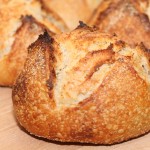
This is why I keep getting back to the pain rustique. I have baked about 80 pain rustique breads and with each I learn something new. It learns me how to handle and shape the fluffy delicate dough into nice evenly shaped breads. It teaches me when to stop the final proofing and when the bread is ready for the oven. When you ‘over’ proof the dough it loses all elasticity and will not expand any more when put into the oven. When you under proof you will end up with a compact crumb. When the final proofing time is right, the dough will expand during the first 8 minutes and when slashed the right way with a sharp razor knife, you end up with a nice burst pattern; the ‘ear’ of the bread. I keep experimenting with the baking time to get a nice balance between the moistness of the crumb and the crustiness of the crust. When the bread cools on a wired rack, the heat and water damp moves from the centre of the bread through the crust. This process ruins the dry crust, as the crust holds some of the moist transferring from the centre of the bread and softens in the process. A few minutes of final baking time makes or breaks the balance between the structure of the crumb and crustiness of the crust.

So pick one or two nice recipes and bake them again and again until you can make the perfect loaf with your eyes closed! I make notes into my little black book each time I change something so I will not forget them for the next baking session; the proofing time, the amount of water, the amount of salt, the changes in kneading time, the temperature of the room etc. I picked the recipes from Jeffrey Hamelman’s book ‘Bread’; the pain rustique, the whole wheat pain levain and the 70% rye bread. I have modified and tweaked the recipes for my oven, my wheat and my taste. I use a rye sourdough starter for the poolish pre-ferment of the pain rustique instead of commercial yeast. This adds even more taste and a little background sourness to the bread. I use 10% spelt in my whole wheat pain levain and I add some large raisins into the 70% rye bread!

Happy baking!


Page 2 of 5312345678910...Last »


Sticky Cinnamon BunsRecipe for Raisin BunsThings We Baked This Weekend IIIThe Best Rye Bread!Things We Baked This Weekend II    & A Word of ThanksBaking Bread: The MovieThings We Baked over the WeekendSan Francisco Sourdough BreadLittle Orchard Apple PiePain Rustique...practice makes perfect!Quest for the Best SpeculaasAutumn MuffinsThe Amsterdam Artisan Bread TestBread Up Close & Personal + More Bread Baking Tips!A Whole Lotta Rolls and Some Useful TipsBread, Figs and RosesPain Rustique & Our New Spiral MixerChicken Pox Spoil Baking FunRofco: Our Brand New Bread Oven!You Guessed It...More BreadCoffee two: It's in the CremaRose Cupcakes with Green Tea FrostingYes, even more Bread...More Bread