
Recipe for Raisin Buns


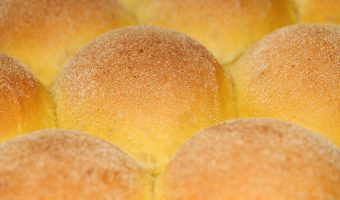
Yes, you need that many raisins so stick to the recipe!

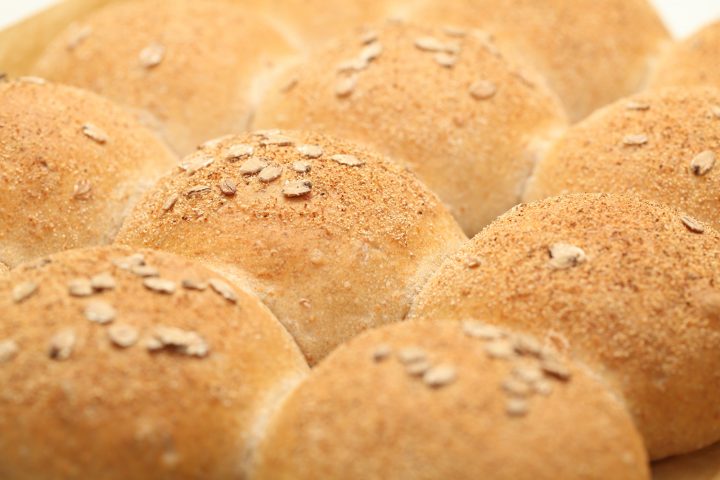
I have been making raisin buns for a while now, and I think I have tweaked and tried the recipe quite to everybody’s satisfaction. Raisin buns are called ‘krentenbollen’ in Dutch, although they are usually made with a combination of raisins and currants (‘krenten’ means currants (for a lecture on the difference between currants and raisins, see end of this post)). I usually make double the amount of this recipe. The buns keep wonderfully well in the freezer and you can give them a quick ‘pick me up’ in the microwave, have some fresh butter at hand (also good without though) and away you go. But nothing can beat eating them slightly warm, fresh from the oven of course. The following recipe is a slightly ‘tuned down’ version of the one I use myself, because I work with prefermented dough and different types of flour etc. But if you want to try raisin buns for the first time, this recipe is a great point to start.

Before you start!
You need to prepare a so called ’sweetener’ which gives the raisin bun dough it’s distinctive and pleasant taste. For this you mix 40 grams of sugar with the zest of 1 unwaxed lemon and one unwaxed orange. You can store this mixture in your fridge, it will keep for a long time. You also have to wash and soak your raisins. First wash them and then leave them for 10 minutes in warm water. Rinse with cold water and leave to dry on a plate for two days (cover them against dust). If you do not want to wait two days, or you forgot, just drain them well and roll them lightly in flour before using. The amount of raisins used is usually the same as the amount of flour used. It seems like a lot, but you need this amount to get a good raisin bun so you do not ‘have to bicycle from one raisin to the next’ as we say. As you make them more often, you will come to your own preferred amount.

Note: if you use American bread flour you probably need 3 to 5 % more milk then we use with our European flour.

Recipe for the Raisin Buns

makes about 12 raisin buns

Ingredients

400 g fine bread flour

40 g fresh yeast or 14 grams dry yeast

8 g salt (I would use 7 which works for me but 8 is more standard)

50 fresh dairy butter

1 egg yolk

270 ml whole milk

10 g sweetener (sugar and lemon/orange zest mix)

400 g raisins, washed and soaked

Making the Raisin Buns
Make the dough with all the ingredients (except the raisins) and with 200 ml of the milk. Then gradually ad the rest of the milk and kneed to dough well. If you use a KitchenAid type mixer, mix for about 8 to 10 minutes. Make sure the dough is not too sticky or too dry. Aim for a bit tacky, which means that when you poke the dough with your dry finger it should stick for a second but then peel of as you remove your finger. Leave to rest for 5 minutes.

Then add the raisins and ‘pinch’ them through the dough very carefully by hand, so they are evenly distributed. If you are lucky enough to own a spiral mixer, you can use that instead and it will only take one minute. If not, just do the hard work by hand. Press the dough down with both hands into a flat disc and roll it up cover it and leave to rest for 15 minutes. Now divided the dough into equal parts of about 80 grams and make rolls. Again leave to rest for 10 minutes. Press the rolls with your hand until slightly flat and round the dough again into a smooth ball.

Place the rolls on a baking tray covered with a baking sheet (we use our reusable thin fibre baking mats).
Preheat your oven to 200 degrees Celcius /392 Fahrenheit. Now the rolls are ready for their final proofing. Loosely cover them with plastic wrap until doubled in size. Depending on your room temperature this should take at least 1 hour, but more likely 1.5 hours or even more. Just be patient and check regularly. When ready place the buns in the oven and bake for 15 to 20 minutes, depending on your oven. They should have a nice golden brown shine. Leave to cool on a wire rack.

Note: The difference between raisins and currants
Dark raisins: These are the most common variety found in most markets, usually made from Thompson seedless grapes. Although they start as green grapes, the fruit naturally darkens as it dries.

• White or golden raisins: These are also called muscats and are generally made of white muscat grapes which are seeded, specially oven-dried (rather than by sun), and treated to retain their light colour. Some golden raisins are dried Thompson seedless raisins which have been kept light by the use of sulphur dioxide.

• Sultanas: More popular in Europe, these raisins come from a seedless yellow grape and are usually softer and sweeter than other varieties. The American variety of sultana grape is the Thompson seedless.

• Currants: Although there is a gooseberry relative known as the currant, the dried currant raisin is actually made from Black Corinth grape called Zante. They are tiny, seedless, and very sweet but do bear a resemblance to the currant berry. The name confusion comes not only from the currant raisin’s similar appearance to the currant berry, but also due to the similarity of the sounds of the fruit names, ie., currant sounds like Corinth, the variety of grape. Tiny dried currants are extremely sweet and aromatic. (source Wikipedia)


Things We Baked This Weekend III


‘Just half a focaccia for me please, I’m on a diet’

This Saturday finally proved to be a good day to get some fresh flour from the mill. It is a bit of a journey for us and the last few weeks the weather was not cooperating (snow, ice, cold). The type of weather I like, but also the one that makes you want to stay close to home and hot cocoa and a warm fire. But we were dangerously running out of flour and then the baking would stop, and at this stage people are counting on us to bake! And we will not disappoint them. So this weekend we did some extra, extra baking with the new flour. Fresh flour is wonderful but if you buy it from a mill and not your average supermarket, you will, like we did, find out that it can act a little different every time you buy a new batch. So this new 25 kg bag of wheat flour did not want as much water as the previous bag. To us this is just a good sign that this is not a mass produced bag of blehhh tasting flour, but something that is alive, full of flavour and changing with the seasons.

It’s the same with milk. We use organic milk that sometimes makes for the perfect cappuccino and latte, but at times it just won’t cooperate and will only produce this fake foam. It’s different every time, because, in a normal world, cows are not milk robots. Same story for coffee. We roast our own coffee beans. You can blend coffees and get the exact same taste year after year (there are people working at big coffee companies who’s job this is). But coffee is a product as interesting and divers as wine and just as dependant on the climate. That’s what makes it exiting and worth exploring.

Back to this weekend’s baking. We did a lot of it. We made green tea and orange shortbread, custard tarts, meringues, pain rustique, sourdough bread, light rye bread with raisins, dark Frisian rye bread and focaccia with tomatoes. And we have some picture to prove it!

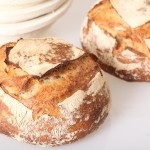
Pain Rustique, SF Sourdough and Rye breads.. and that was just the Sunday

These Custard Tarts are dangerously addictive and so much fun to bake!

You can find the recipe for the custard tarts here

Short is just another word for butter with shortbread but the green tea makes it ‘a healthy option’ right?


The Best Rye Bread!


As a child I loved this dark, moist rye bread, which in Holland we call Frisian Rye bread (Fries roggebrood). I never thought that one day I would make it myself and the result would be so rewarding! You have to be patient with this one, because it takes about 10 hours in the oven, but if you put it in before going to bed you will wake to a wonderful smell of fresh rye bread that has magically transformed itself while you were sleeping. I like it best with mature Dutch cheese with cumin or cloves. Rye bread is also eaten with bacon to accompany split pea soup, one of our proud Dutch culinary traditions. And did I mention it is very healthy too, one of the best ways to get that recommended daily doses of fibre…

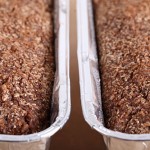
Before their night in the oven the loafs get coated in wheat germ…more fibres please

The finished product is lovely and moist and keeps very well in the fridge

Recipe for the Rye Bread

makes 2 loafs

Ingredients

700 g broken whole grain rye

200 g whole grain rye flour

50 g fine rye flour (can be substituted with wheat flour)

50 g wheat flour

2 tbsps date syrup or molasses

13 g sea salt

700 ml HOT water

approx. 200 ml water at room temperature

wheat germ for coating

Making the Rye Bread
Before you start you need two pans of about 20 cm long by 14 cm wide and 4.5 cm high to put the loafs in when they go into the oven. We used (disposable) aluminium pans I bought at the windmill where I also buy my flour, they are also used to make sugar loafs. Start with placing the 700 g broken whole grain rye in a (plastic) bowl and add the HOT water (just off the boil). Mix with a wooden spoon, cover and leave to rest/soak for 2 hours. The broken rye grains will absorb the water and become soft, this is very important for the rye bread to become a success! Preheat your oven at 110° Celsius/ 230° Fahrenheit (yes, you bake this bread on a low temperature!). Now add the rest of the ingredients, including the 200 g of water at room temperature. Note: the adding of the exact amount of water is a matter of experience and depends on how soft you want the rye bread to become. You will see what works best for you and your own ingredients as you make the recipe more often. Now knead well by hand or mixer until combined. Be careful a KitchenAid style mixer can handle it because the dough is very tough and sticky, use your hands if your mixer gets too hot or starts acting funny. We use a bigger spiral mixer, brand Hauessler from Germany, that is up to this sort of job. Divide in two equal portions and shape them into loafs that fit in the pans. Roll the loafs through the wheat germ until all sides are thinly covered and place them in the pans. Now cover the pans completely with 2 layers of aluminium foil so no moisture can escape. Place the loafs in the preheated oven and leave them there for 9 to 12 hours (we did 9.5 the first time and 10 the second run and they both got good results). Take the pans out of the oven but DO NOT OPEN until completely cooled to avoid losing moisture! This can take several hours, so curb your curiosity.

The baking period needs to be this long because the rye substance is very compact and contains almost no air, making heat transfer slow. This is a very old Dutch (Frisian) recipe, we think this bread was normally baked (cooked almost) during the night on the residual heat of a stove.
Cut into 3-4 mm slices with a wetted bread knife (dip in water after each slice), the bread is very crumbly and sticky. You can make little packs of sliced rye bread that keep very well in your fridge for over a week. You can keep the rest for much longer in the freezer.

We like to thank ‘roggebrood fanaat’ at bakkerswereld.org for this excellent recipe.


Things We Baked This Weekend II & A Word of Thanks


Thanks everyone for the enthusiastic, stimulating and inspiring reactions to our first bread video (see previous posting). And also to all the people who tasted our bread this year and asked for more! and also gave very useful tips for improvement and additions. More and more we are convinced of the positive properties of good bread. We see that bread is the food that binds people all over the world. And there’s so much more to try out and perfect. We look forward to lots and lots of baking in the new year and sharing bread and tips and recipes with other bakers. Maybe it sounds a bit emotional and sentimental, but the year is drawing to a close and you look at the balance and realise there is a lot to be thankful for. The thing Ed and me both wish for is more time. We found out that time is a very good friend to our bread and it would also be for a lot of people. So our wish for everybody is to have more time to enjoy good food and good company in the new year.

On with the baking! This weekend we went a bit overboard and baked 14 breads, 5 cakes, 3 pizza’s and still managed to try out a few new recipes for mincemeat and puddings AND watch several Christmas cooking shows and old Christmas movies like the original ‘Miracle on 34th Street’ with Natalie Wood from 1947, and look out of the window watching the snowflakes fall! We didn’t get to watch ‘Groundhog day’, which is my favourite sort of seasonal movie, but hopefully that’s on for tonight! Below the recipe for the wonderful fruitcake with cardamom you see in the picture above (here I made mini versions in my new baby bundt pan). This cake is such a good combination with a cup of cappuccino!

Bread with toasted walnuts, figs and prunes

There is 25% wholeweat in this loaf, so it’s fruity, nutty and healthy!

My first attempt at ‘Kruidkoek’ (spiced cake without butter) turned out quite well but can still use some ‘tweaking’

With our trusty Alfredo pizza baker we made pizzas with a sourdough based crust

Recipe for the Cardamom Fruitcake

Ingredients

200 grams of butter

200 grams of sugar

200 grams of self raising flour

4 large eggs

200 grams of dried apricots

100 grams of raisins

100 ml of almond liqueur

zest of 1 big unwaxed orange

pinch of salt

1 tsp of cinnamon

a hint of ground cloves

1/4 of a tsp of cardamom if you grind it yourself from cardamom pods, if you have pre-grounded use a bit more

Making the cake
This is easy. Preheat the oven at 175° C. Cut the dried apricots in little pieces, add the raisins and soak this in the liqueur for at least 30 minutes. Mix the butter and sugar well and add the eggs one by one until light and fluffy. Carefully Mix in the other ingredients and but the mixture in a greased cake or bundt form. With an ingredient like cardamom it’s important to get the amount just right, too much will be overpowering and too little will be a shame. Try to taste and test a little as you put it in. I also put in the liqueur that’s left over after the fruit has soaked. If you find the mixture to dry, you can also add a little milk. This cake takes a while to bake, so have some patients. If you make the big cake with all of the ingredients it takes at least an hour. For a small cake with half the ingredients (perfect for sharing with a few friends) it takes about 45 minutes, mini bundt cakes around 25-30 minutes. Just keep an eye on the process. Meanwhile the house is filled with warm, welcoming smells that seem to be made for cold winters, I love that about this cake! And while snow is falling all around, you and your loved ones will be cosy inside enjoying this cake with coffee by the fire.

Last Minute tip: We tried out the Hairy Bikers ‘Christmas Panna Cotta’ with rum soaked raisins, ginger, allspice, cinnamon and nutmeg. What a yummy fragrant pudding! We loved it!
Find recipe link here


Baking Bread: The Movie


For the people who want to know the details: This film shows the making of a Pain Rustique French style bread based on a sourdough poolish (12 hour, 100%) with a high hydration dough, autolyse and stretch and fold technique in our Rofco hearth bread oven. We use German banneton’s (baskets) for the final proofing. The recipe is an adaptation of the Pain Rustique (Jeffrey Hamelman’s book ‘Bread’) recipe, however I have changed it a lot to fit our taste, oven and European flour.

Enjoy the real life ‘oven spring’ of the bread filmed in the oven. It starts at about 2:41 in the movie. We filmed the bread in the oven for 15 minutes and sped it up to fit in about 1 minute. So you will see the bread rise and brown in real time! It is really cool to see, do not miss it!

Note: The movie is filmed in full high definition quality (Full HD) so you can click on the ‘full screen’ icon (second icon on the bottom right) of the YouTube movie and also the ‘HD’ YouTube button and you will see it in very good quality, provided you have a broadband internet connection!

Let us know what you think about it!

Also see our posting, comments and more information at The Fresh Loaf bread baking community !

Ed

BAKING BREAD: THE MOVIE


This is what the crumb looks like, up close…


Page 1 of 5312345678910»...Last »


Recipe for Raisin BunsThings We Baked This Weekend IIIThe Best Rye Bread!Things We Baked This Weekend II    & A Word of ThanksBaking Bread: The MovieThings We Baked over the WeekendSan Francisco Sourdough BreadLittle Orchard Apple PiePain Rustique...practice makes perfect!Quest for the Best SpeculaasAutumn MuffinsThe Amsterdam Artisan Bread TestBread Up Close & Personal + More Bread Baking Tips!A Whole Lotta Rolls and Some Useful TipsBread, Figs and RosesPain Rustique & Our New Spiral MixerChicken Pox Spoil Baking FunRofco: Our Brand New Bread Oven!You Guessed It...More BreadCoffee two: It's in the CremaRose Cupcakes with Green Tea FrostingYes, even more Bread...More BreadBaking Bread